TenderJet: from first users to first results
In July we wrote about why we are building TenderJet: one platform for the whole tender process, from finding a tender to learning from the outcome. A little over three months later, it is time for an update.
Co-creation customers at work
TenderJet is now used by our co-creation customers, on real tenders. That is exactly what this phase is for: they use the product in their daily work, we see where it chafes, and we adjust it in short cycles. Part of the improvements below came straight from their feedback, sometimes within a day of the report.
The first results show where we expected them: in the preparation work. Extracting every requirement from the tender documents, keeping track of questions and deadlines, and collecting evidence takes noticeably less time. That time goes to where the difference is made: a strong bid.
Conversations with the ecosystem
Besides users, we talk to tender agencies, freelance tender managers and advisers. People who work with tenders every day, and who see a lot of tools come and go. Those conversations are valuable precisely because they are critical. A few things we heard:
- The big tender tools do not cover the whole chain. Most focus on one phase, such as finding tenders or writing. The whole process in one environment, at a price for smaller companies, is recognised as a gap in the market.
- The first gain is efficiency. For smaller companies, requirements analysis often delivers more than the writing.
- Also record why you do not bid. A go/no-go decision only becomes valuable when you can learn from it later.
- Agencies and advisers want to work across several clients. A recurring request, which we are taking into the roadmap.
Many demos are planned for the coming weeks, with companies that bid themselves and with professionals who help others do so.
What we added in recent weeks
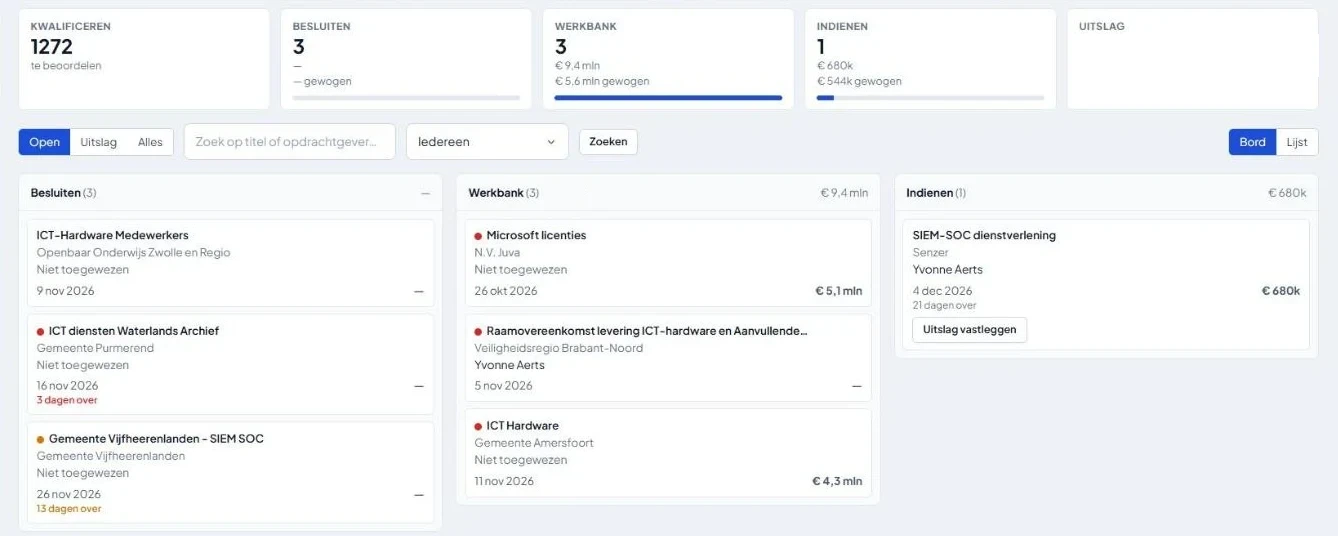
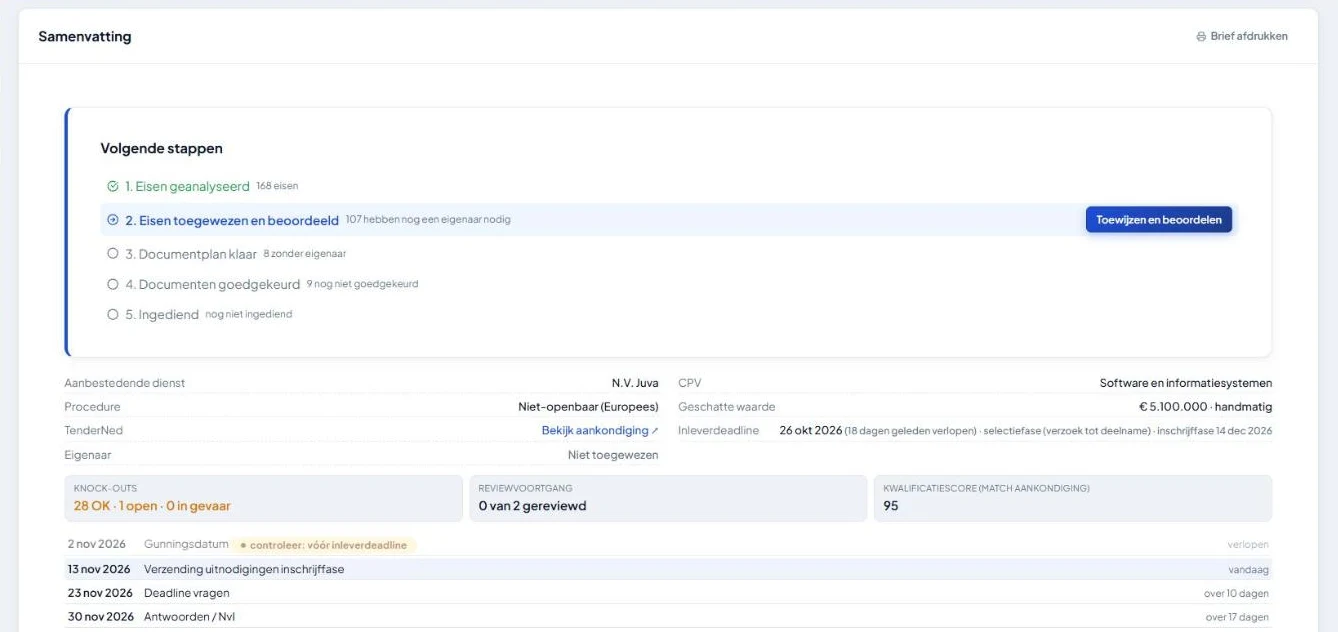
One clear route through the process. Every tender goes through the same phases: qualify, decide, prepare, submit and result. Menu, overviews and dashboard use the same terms everywhere, and for each tender you see the next step and who owns it.
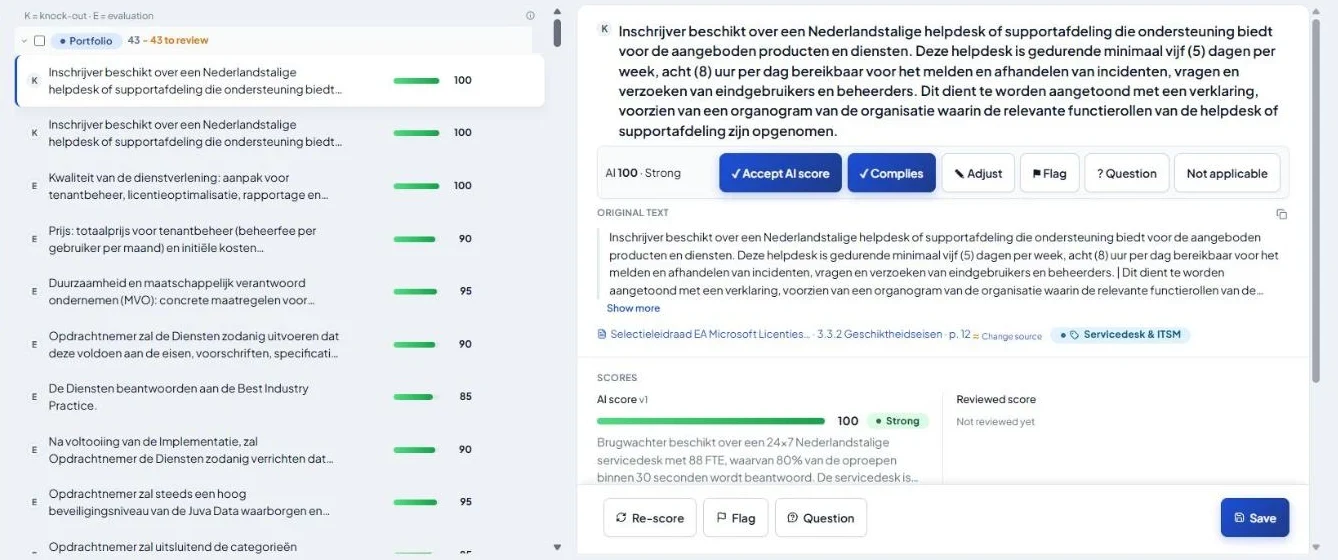
Requirements with their source. For every requirement from the tender documents, TenderJet shows the verbatim quote and where it is in the document. Duplicate requirements are merged into one assessment, and requirements without a traceable source are set aside instead of being counted silently.
Go/no-go with a rationale. A structured evaluation form, with a four-eyes check on approval. Letting a tender go means recording the reason and category.
Forms filled from your company data. Smart Fill completes the forms in the tender documents with data from your company profile and references. Word limits and writing rules per document are visible while you write, and an AI draft takes them into account.
Questions for the clarification round. Collect your questions per round and export them to Excel or Word in the format the contracting authority asks for. The answers are read back in, and you see what changed.
Submitting without loose ends. A check before you submit, and one download with the complete submission package: all documents, evidence and an overview.
Learning from the outcome. After award or rejection, TenderJet analyses the evaluation and lines up lessons for the next bid. The result can also be downloaded as a formatted PDF.
Working together. Work and approvals reach the right person, everyone has their own task list, and the bid manager sends everyone an overview of open actions by email in one click.
Help centre with an assistant. Guidance on every screen, and an assistant that answers questions about using TenderJet, in Dutch too.
Dutch interface. Every user chooses Dutch or English.
Want to take part?
Do you bid on public tenders, or help others do so? We would be glad to show you TenderJet on a tender that is relevant to you. More at tenderjet.nl, or get in touch.